A Time for Fasting
Heeding the council of the Lengthening.

What has changed?
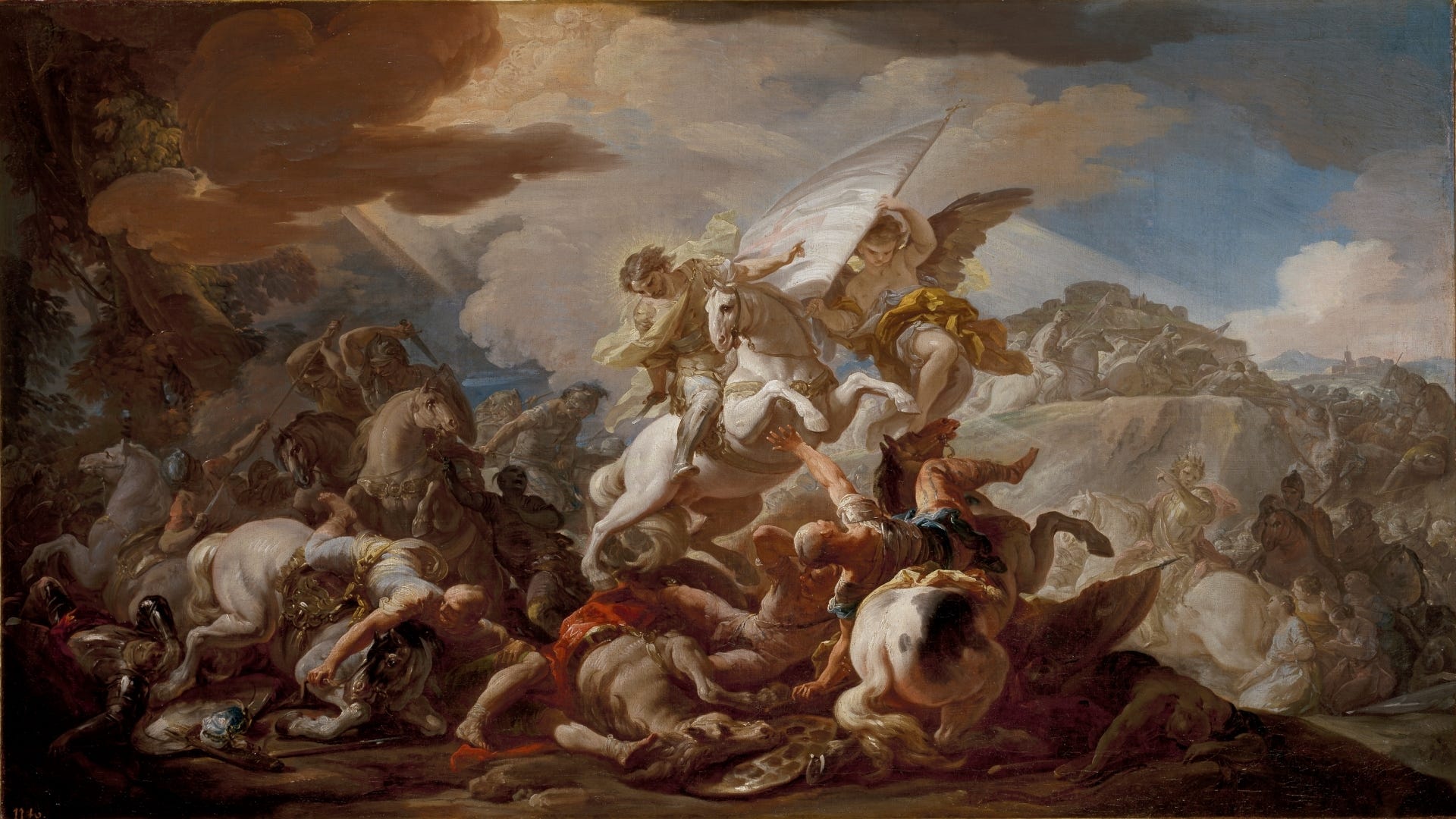
You sense it, don’t you?
We are not in the same place that we were.
We’d grown so accustomed to the edge — to those horrors associated with potential.
We didn’t like it, but it was home. And there was a comfort in that.
Like an eager adolescent in a remote village,
We spoke and dreamt only of leaving.
And now that we’ve left (and believe me — we have),
We might find that some of the armor around our hearts has dissolved.
We might look back at the village, and finally seeing it with pure eyes,
We might try to hold on.
We might cry.
I cried.
Two weeks ago, I wept.
It was a photograph that incited my tears.
This photograph:
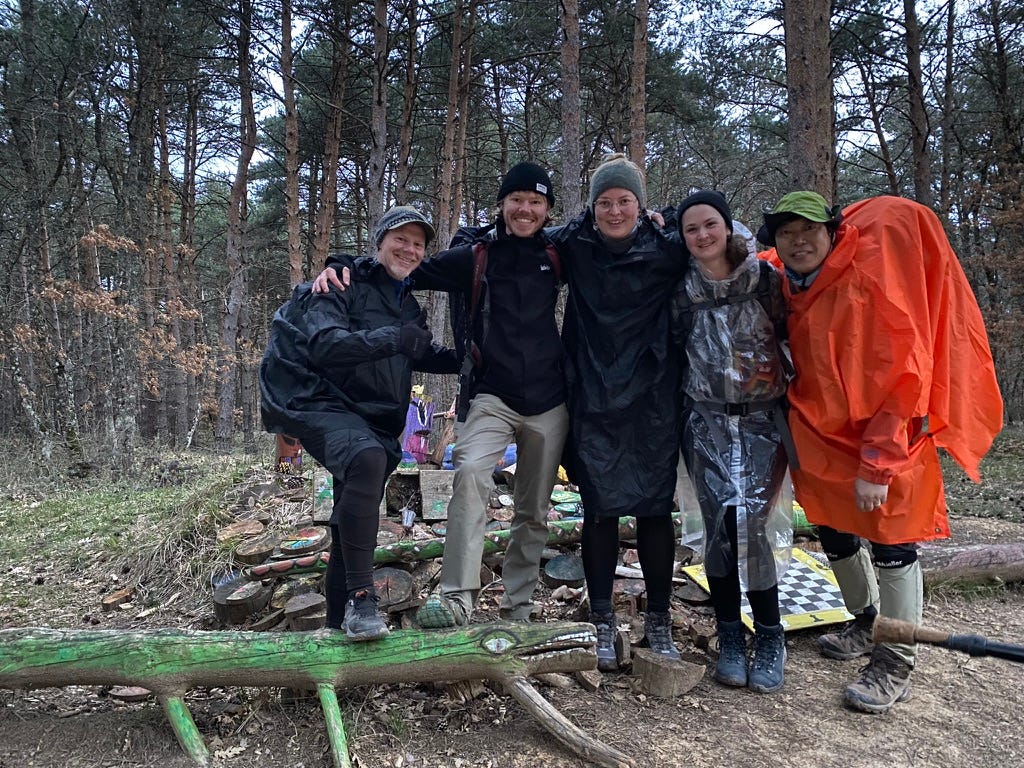
That’s me, second from the left. Almost exactly three years ago, to the day.
I am somewhere in España — Somewhere on the 500 mile road from the French Pyrenees to Santiago de Compostela in Northwest Spain.
The Camino De Santiago or “The Way of St. James”, is the most important thing I’ve ever done for myself.
At the time, it was the greatest leap I’d ever taken.
I quit my job, shed my possessions and identities, and I flew to London.
From there, I took the train to Paris, and then Bordeaux — I cried there, too.
It was the anguished sort — the expression of one who has forgotten the miraculous, and searches for it nonetheless.
But that was years ago.
I’m somewhere else now.
So why, on this occasion, did the photograph manage to coerce the excess salt from my eyes?
Here’s what I wrote in my journal the following morning:
“…I saw my own innocence.
My own purity.
And I wept.
I want to sit at the feet of that one.
I want to remember what he knows…”
I wept because I could see a thing intangible that was radiating through me at that time.
And it was something that I had not been seeing in the mirror of late.
I cried because despite his naïvety, inexperience, his boyish fears and his suffering,
I could see in his eyes that he knew something which I’d forgotten.
Something essential.
I’ve been busy lately.
That’s new.
I’ve not donned the cloak of busyness in several years.
I came to see it as trap.
Busyness is a chloroform rag, I thought.
And while it has you,
Everything Real,
Everything that it purports to serve,
Is stolen.
It doesn’t feel that way to me any longer, not quite — but busyness still feels dangerous.
And when I saw this photograph, I saw that the danger of it had begun budding in me;
I saw that I was beginning to behave more like a large language model than a symphony.
And I cried.
Three days later, I arrived in the wild.
I’d missed her.
I said it out loud.
“I’ve missed you”.
I cried, again.
Just a little bit this time.
It’s Lent,
Just as it was three years ago when I walked that Strange Road to Santiago.
Lent is not a tradition I grew up with, and I confess that the word feels a bit sticky and sour to my palate. It was always the sort of thing that “those weird catholics” did.
I’ve never understood it, but I’ve begun to realize that — understand it or not — I’ve been unknowingly participating in the tradition of Lent for some time now.
The word Lent originates from the Old English word lencten, meaning “spring” or “springtime”. It refers to the “lengthening” of days that occurs as we travel from Winter into Spring.
On the liturgical calendar, Lent is the period of 40 days that precedes Easter Sunday.
Symbolically, it is meant to reflect Christ’s period of 40 days in the wilderness — where he fasted and was tempted and purified before beginning his public ministry.
The modern practice of Lent is often reduced to the very simple question of:
“What are you giving up?”
Many people choose to abstain from a vice like social media, sugar, or caffeine and turn their attention instead toward God, charity, and inner work.
It is a season of fasting. And it always has been.
Prior to the instantiation of widespread institutionalized religions, the period between Winter and Spring was the time at which food stores from the harvest were at their lowest, and this home stretch of scarcity and reliance on the Unseen was an inescapable beat in the rhythm of life.
And that sort of memory, it doesn’t go anywhere.
Like it or not, this is a season of fasting. Of restraint. And the body knows that.
My body certainly does.
Less than two weeks into the ~35 day walk to Santiago, I began fasting;
For no reason other than an adherence to the cries of my own body and spirit.
They were declaring to me that I must fast.
So I did.
At the time, I’d become enthralled with the work and teachings of Sufi mystic Ibn ʿArabī, who — as it happens — wrote a great deal on fasting.
Here are a few quotes taken from Ibn ʿArabi’s “The Meccan Openings”:
“The faster takes on a divine quality, for God is independent of food and drink.”
“Hunger refines the heart and sharpens perception.”
“Fasting is a hidden act of worship, and what is hidden is closest to sincerity.”
Fasting has become rather popular in recent years amongst the kingdoms of biohacking and human optimization. The physiological benefits of fasting are, evidently, visible under a microscope.
People report all sorts of benefits from extended fasts: increased energy, mental clarity, reduced inflammation, improved metabolic health… it’s a long list.
But, to be honest, these sorts of lists and the language that is used to convey them are not particularly compelling to my disposition. The data is useful, no doubt, and I’m delighted to know of these physiological side-effects, but it just doesn’t feel as though its speaking to me — to why I do it and what it’s actually like.
I feel far more at home around the sort of language used by Ibn ʿArabī when he writes things like:
“The servant approaches the Divine through need, and fasting reveals that need.”
Fasting for me is a battle, it’s a harrowing, it’s a distilling of the spirit — and it’s not something I’ve ever felt capable of doing casually.
It always reveals to me just how far I’ve strayed from True Rest in and Reliance on God.
Something about fasting seems to incinerate the glaze that’s settled over my daily life and reveal to me the painful and perfect truth that almost every single thing I do is an attempt to run from emptiness.
So, when I fast, I don’t carry on with life as usual.
I clear my schedule.
And I seek to let the emptiness teach me.
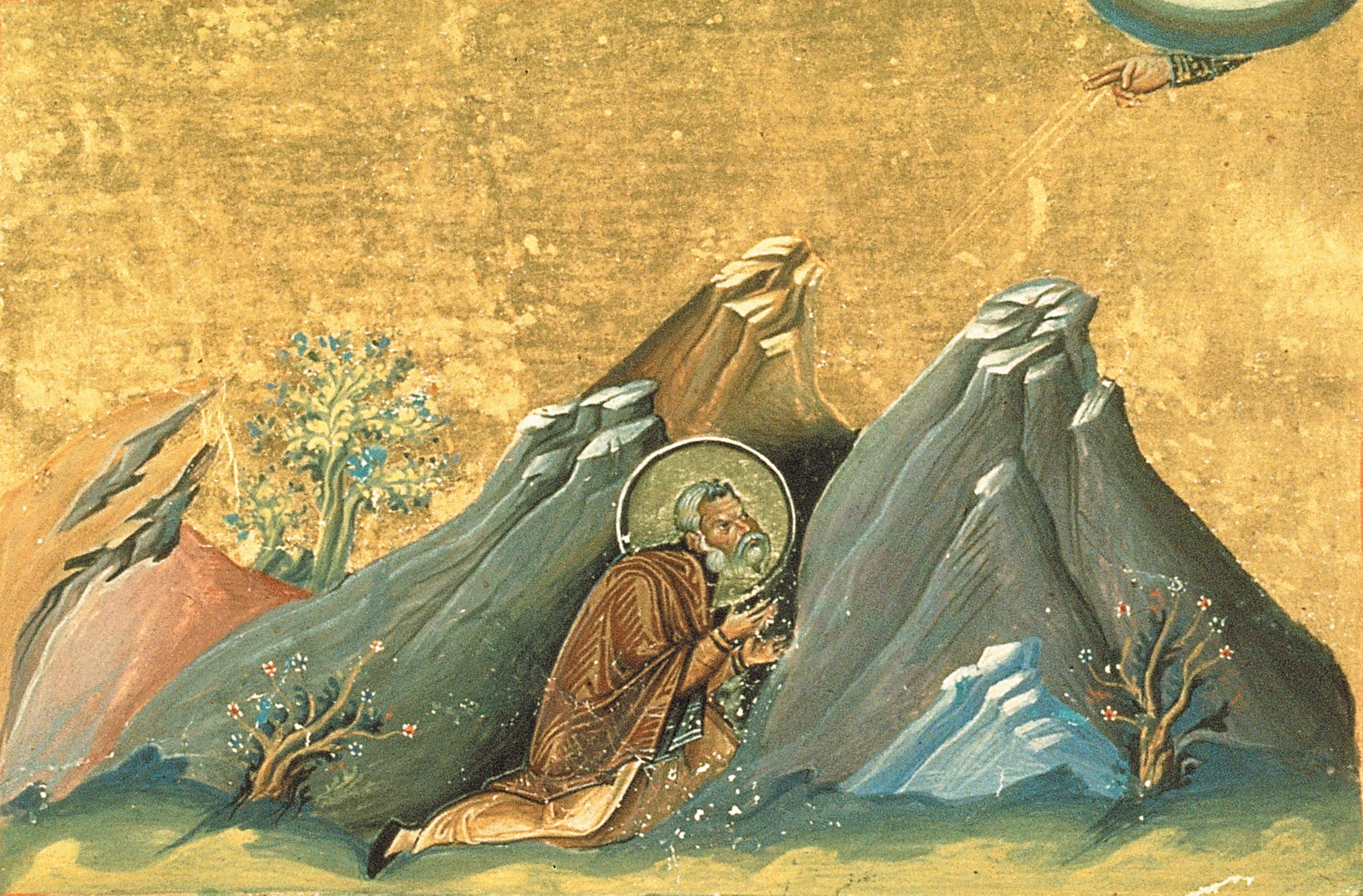
“Blessed are the poor in spirit.”
That’s exactly what I did on this occasion.
After being so thoroughly pierced by the photograph, I cleared my schedule. Time for a fast.
It so happens that a few days prior to my encounter with the photograph, I’d made a new friend — one who owns seven acres of wild Hawaiian Jungle. She’d only just taken me on a little walk into the deep wilds to show me her “nap structure” — a tarp stretched over some springy guava sticks. I had to stoop low to enter it. There was a piece of cardboard on the dirt floor for padding and a book, “The Rest Revolution” by Amanda Miller Littlejohn. It felt, nice. Like those pillow and blanket forts I used to make as a child.
I asked her if I could use the structure to house my three day fast.
She obliged.
Before I knew it, I was on track for another explicit initiation.
I packed enough water for three days, blanket, pillow, sleeping bag, notebook, and — guided by intuition — a copy of “The Pilgrimage” by Paolo Coelho. “The Pilgrimage” is an odd recounting of Coelho’s own experience walking the Camino de Santiago. I’d begun reading it nearly a year ago, but had not gotten very far into it.
Before departing for the wilds, I had a few loose ends to tend to.
Chief among them was to schedule coffee date with a friend — we’ll call him Goldie.
Goldie is 79 years old and is exceptionally active in generating and stewarding initiatives in my local community. He calls himself a “cultivator in the garden of life”, and he enjoys watching things and people grow.
When I arrived for our meeting, Goldie was noticeably on edge.
He was tense, impatient.
Among the first things he uttered to me was:
“What do you want from me?”
I was a bit taken aback. And then moved to compassion.
“I don’t want anything from you, I value our connection, so I’m tending it.”
He eased a bit.
Throughout our discussion I quickly learned that he was overwhelmed. Meetings, community initiatives, committees, plans, events, group threads… noise, noise, noise.
He cried.
I took his hand.
“Goldie, you’re seventy-nine. I don’t think this is your job anymore. It’s a young man’s job.
It’s my job.
And, to be honest, I don’t think this is what the community needs from you right now. It’s not what I need from you.
I need an elder.
Your busyness, all these meetings, they aren’t your soul.
It’s not helping.”
Something about those final words struck.
He said it with me, emphatically, with such relief, four or five times.
“It’s not helping.”
“It’s not helping.”
“It’s not helping.”
“It’s not helping.”
I recalled that the first time Goldie and I had met for coffee, he’d told me about the memoir he was writing. He’d emailed me a completed chapter. I had been riveted, moved, and inspired toward respect. This was often how I felt when Goldie would casually relay to me the very human experiences he’s had over the course of his long life.
It’s not at all how I felt when he’d talk about meetings and community events he was organizing.
I’d feel something more akin to: “I could be doing a better job at this than him”.
I asked him how the memoir writing was going.
He said it had been quite a while since he’d worked on it.
“Goldie, in my opinion, the world and this community would be better served by you giving yourself the space to finish your memoir than by you burning the candle at both ends trying to play a young man’s game. I know I would be.”
“I need an elder”
Goldie then told me that he believed part of the weight he was feeling was grief, because he knew that this busy middle chapter of his life was ready to close.
My meeting with Goldie was the final stop before I ventured into the jungle to begin my three-day fast.
The theme of our conversation was something I carried with me.
It’s my turn.
“I’ve missed you.”
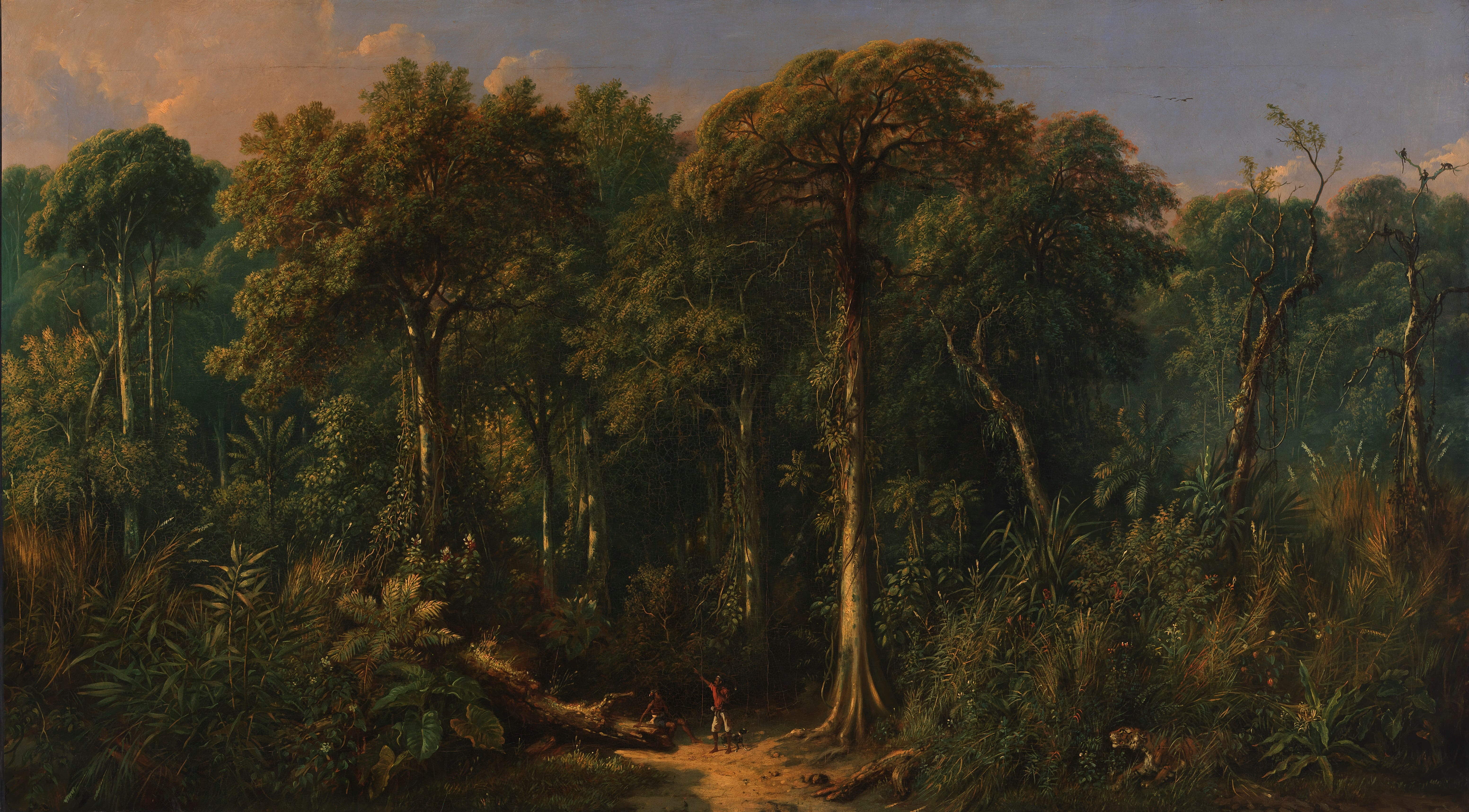
The moment I entered the wild, I was moved to emotion.
I sat down on the middle of the lava rock path.
There was no rush to get to the structure.
Here, at last, there was no rush toward anything.
“This used to be all I did.”
My mind was frantic, but some old hand had begun wrapping itself around me and would continue holding me for as long as it took to remember the stillness.
It would take a while.
There was a man, who I shared a pasta dinner with after my first full day walking the Camino De Santiago.
That first day was harder than anyone had expected. Crossing the Pyrenees. There was a healthy dusting of of snow, which had blocked off some of the standard routes and closed the option of resting for the night halfway.
The man, I can’t recall his name, was from Italy. He’d been the last person to complete the days hike, by several hours — it was dark when he arrived. He was dirty, and this was amplified by contrast: he was not dressed for a mountain hike, he was dressed business casual, resplendent with a gold wristwatch and now sweat-soaked collared shirt.
He’d had an air of conflict about him that was bleeding toward regret.
As the warm food and fresh wine began to massage his spirit, he shared how he’d ended up there.
“My best friend died last month.” he told us.
“Two days ago, I had a dream. My friend came to me and said ‘You must walk the Camino De Santiago’. I knew nothing about it. But I booked a flight and here I am.”
At a table brimming with interesting stories and characters, he stood out.
We came to learn that he owned two successful businesses and had left a wife and three children behind in this abruptly inspired departure.
The next day, I’d walked with him briefly.
He was talking about leaving. That he’d made a mistake.
I’d encouraged him to see the adventure through to the end.
The following day, he was gone.
I never saw him again.
He came to mind as I found myself wrestling to detach from the obligations of my ordinary life.
Had I been irresponsible in so abruptly clearing three days to sit in the forest?
I don’t get to be so rash anymore. I have responsibilities.
“It’s my turn.”
I finally understood the Italian man and his decision to leave.
I wished him well.
When I fast, two things tend to rise up swiftly to meet my awareness.
First, is a recognition of the debilitating severity of my mental chatter and shattered attention span.
Second, is a recognition of the Weight, that leaden weariness in my body and my bones.
I am taken back to the experience of my decade-plus tenure of chronic illness; where getting out of bed every day was more challenging than crossing the Pyrenees.
One of the first things I wrote in my notebook on this fast was the following:
“I’m gonna let myself be ‘depressed’. I want to see what happens when I’m not surrounded by people and ideas trying to talk me out of it.”
See, I don’t fear “depression” anymore. I’ve journeyed with it long enough to know where it leads; and what it’s asking for. There comes a moment in the cycle where that impulse to simply be crushed by the weight of it all — to feel it — is exactly what needs to happen — when the preventative measures of personal maintenance are not helping, they’re numbing.
So, I collapsed.
I resisted the urge to “fix” myself with spiritual practice, or to “make the most” of this experience — no.
Those urges were stemming from illness, and the feeling of unbearable weight was stemming from health.
It’s almost embarrassing to recognize the state of my attention.
It’s been a constant area of concern for the last fifteen years.
You might not guess it based on my creative output, but — the vast majority of the time — I can scarce focus on anything thing for more than a few seconds. Often, it’s taken me the better part of three hours to write two or three short paragraphs for this publication.
And throughout my chapter of chronic illness, it was this that I found to be among the most debilitating — not the arthritis, nor the neuropathy, nor the alopecia, nor the insomnia — it was my attention.
If I just had my attention back, I could at least begin to confront these other challenges.
If I just had my attention back, I’d at least feel like I was here.
In my attention-healing journey, I’ve found it must be approached from two sides:
First is the “top-down” approach of actively training it. Meditation, focused blocks of work on a single intention, refusing the impulse to “multitask”. I owe a great debt to Erick Godsey and the Dharma Artist Collective for teaching and training with me in this arena.
But, second, and equally important is the “bottom-up” approach. Which, so far as I can tell is a matter of creating the space for the mind, body, and spirit to all get caught up and synchronized with one another. I’ve found that so many of my attentional difficulties have arisen simply because I haven’t fully processed and integrated past events and experiences.
This symptom compounds over time. One unprocessed experience unconsciously tethers a piece of my attention to that experience until it is processed. This results in less available attentional resources at the present. Which means that the present isn’t being adequately experienced and digested either. You can see how might lead to a highly dissociative experience of the present and a backlog of whispering loose ends from the past.
So, upon collapsing under the Weight and choosing to allow “depression” into the room, my attention began to travel. Like a ping pong ball it bounced from scene to scene.
Being alone in the wild is a doorway back into chapters of my life that I still do not understand.
I travelled back to the eight days I spent doing the very same at the Hill of Tara — the seat of Ireland’s High Kings — almost two years ago.
I travelled too to my bedroom in New York City, five years ago, where I spent much of my time under the covers, crushed by the Weight.
I travelled to the cobbled streets of Chartres in France, where I’d lived in a tent tucked behind one of the most powerful cathedrals in the world — with a woman I’d thought I was going to marry.
I travelled forward, into the dramas I privately feared might unfold, and the ways that life might blindside and devastate me again.
I began to observe myself. Rather critically.
“Am I full of shit?”
“Am I a coward?”
“How swollen has my ego become?”
“How weak and numb have I become?”
I’m gonna to let myself be “depressed”…
Enough of that.
Time to read.
Here’s another secret.
When I was around 15 years old, I lost the ability to read.
It’s not that I could no longer decipher the symbols on the parchment,
It’s that my attention span had become so injured that it was not possible for me to digest more than one or two sentences before being completely hijacked by ballooning extrapolations.
It’s something like this: every single word on the page would land in my consciousness like an individual hyperlink with its own unique branching associations rather than a linear string with an overarching motive. I had no agency to decline these hyperlinks and each word would carry me into its own realm of association — completely distinct from that of the following word.
By the time I’d gotten through a sentence (which could take several arduous minutes), I’d have no idea what the sentence itself was actually trying to convey — only the swath of personal associations that I had connected to each word individually.
I’ve been learning to read again.
It’s slow going, but it’s rewarding. And promising. too.
I’ve found that one of the only times I can manage to get through a book and adequately digest its contents is when I’ve cleared the schedule for a multi-day fast.
So, I was glad to have a book with me.
The Pilgrimage by Paolo Coelho, author of the renowned novel The Alchemist.
I’ve already referred Coelho’s recounting of his experience on the Camino as “odd”.
And, I’d like to reiterate that point here.
Without going into much detail, I’ll say that had I not walked The Pilgrimage myself and experienced its strange radiance firsthand, I might’ve assumed much of Coelho’s tale to be fictitious. But, having had my own set of experiences on the Strange Road to Santiago, I’d confidently wager that Coelho’s account is largely sincere and autobiographical, as he suggests.
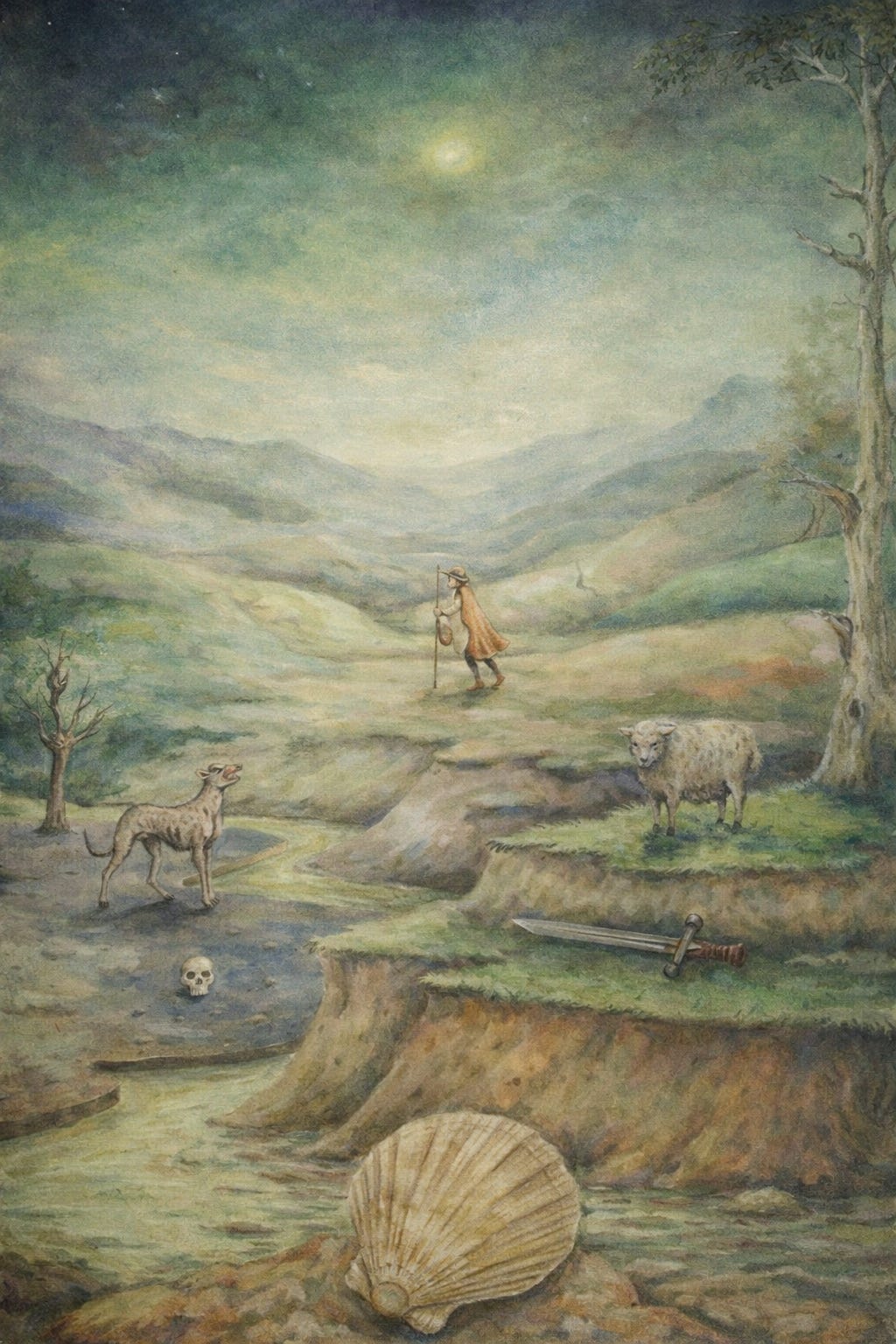
Coelho writes of his experience in the first person, and refers to himself by his own name — Paulo. As he describes it, he had a guide on his walk to Santiago, an Italian man, named Petrus.
Petrus’ role is that of both trail guide and esoteric teacher. Paolo has been sent to walk the Camino after failing his initiation into an ancient order — referred to only as The Tradition.
He is told that somewhere along the route, his sword (which he should have been bestowed upon completing his initiation) has been hidden.
I opened to a chapter titled “Personal Vices”, the content of which is almost entirely a prayer spoken by Petrus. I’m tempted to quote the entire thing here.
It’s brilliant.
Petrus tells Paolo that once he has his sword, the only thing that can defeat him is his personal vices —
“One of your hands will always be your potential enemy” (133)
The prayer that follows is a series of paradoxical paragraphs, each one beginning with a request for God’s pity on a particular sort of person — followed by a request for even greater pity on that person’s loose opposite; saying that neither one of them knows a particular Divine Law. Here’s an example:
“Pity those who eat and drink and sate themselves, but are unhappy and alone in there satiety. But pity even more those who fast, who censure and prohibit, and who thereby see themselves as saints, preaching your name in the streets. For neither of these types of people know your law that says, ‘If I bear witness of myself, my witness is not true’” (135).
I jotted that one down in my notebook:
“If I bear witness of myself, my witness is not true”.
The phrase is still having its way with me.
I’ve been wrestling with the tension between secure empowerment and ego inflation.
I’ve been fasting from social media for the 40-day duration of Lent.
At the time of my departure, I had hundreds of new followers, comments, and DMs pouring into my Instagram account by the hour.
I was on a roll, and something about the state of consciousness which coincided with that roll informed my stark and weeping reaction to the photograph at the top of this article.
There is a soul-devouring element to digital space.
As if I myself must become two-dimensional in order to represent myself within it.
And if I’m not careful, that two-dimensionality will begin to bleed out into every bit my vast and multi-dimensional life.
Before I know it, I’m not feeling sincerely interested in souls of those I encounter, though I might still utter all of the correct syllables to imply that I am.
I could get away with it too, it’s not like anyone seems to notice. Or care.
But I care.
I do.
And I believe that in private, we all do.
I’ve spent a lot of time living in the wild.
A lot of time off of the internet.
A lot of time talking to strangers on benches, sitting with beggars, listening to the birdsong.
I think the primary motive for much of this has been an insatiable desire to encounter the Real.
Life and her people and places and things had all begun to feel counterfeit.
Like they were emulating the thing that they knew they ought to be.
And I couldn’t bear it.
What I found at the bottom of these experiments was that I care.
A lot.
And, as I’ve begun to find a fulfilling creative rhythm in digital space, I am on the one hand overjoyed and awed at the opportunities, connections, and the sincere feeling of purpose it has afforded me. On the other hand, I’ve found that there is a god-like infrastructure of incentives in this space that is at every moment ushering me toward the cultivation of something untrue.
“If I bear witness of myself, my witness is not true”.
There is a disproportionate quantity of “bearing witness of self” that occurs when I am in a season of content creation.
As a result, I am carried on a trajectory from sincerity to self-obsession.
I feel a pressure to flatten myself and become a caricature who is fulfilling an expectation rather than an artist who is fulfilling his sacred obligation.
And, to me, that matters.
Personally, I don’t believe it’s enough to say all the right words, to create the content that checks all of the boxes and “works”.
What matters is the place within me from which the content is emerging.
And if I start to lose that thread, I’ll take a step back.
Because, like with Goldie with his important meetings and community initiatives,
It looks great on paper (or screen), but —
“It’s not helping.”
To be continued…
Music: I’ll take this opportunity to announce that I’ve removed my entire discography from Spotify and streaming services. It will endure in perpetuity on Bandcamp.
I’ve also really been enjoying the Sun Hill EP by dome 3000
See you soon.
And by the way, I’m not depressed.
I’m really, really happy.
J
So much resonance here, brother. I feel the calling in and out of presence to intimate and social spaces. I feel the need to quiet and abstain to reconnect. I feel the weight and the soaring happiness of this soul journey. Thank you for sharing yours here. It helps, a lot.